
Best Winter Dog-Walking Gear for Cold, Wet Weather
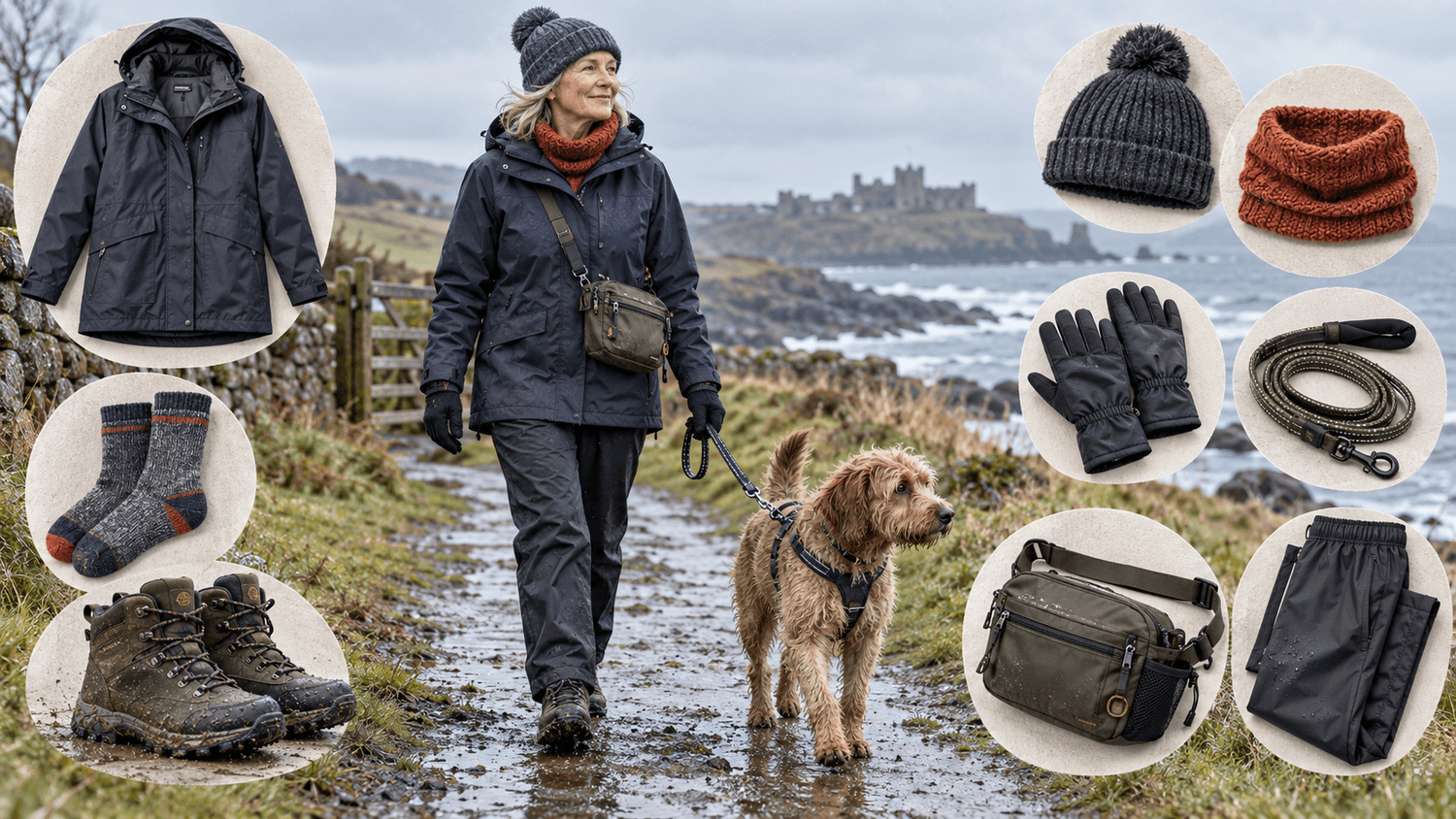
I’m a professional pet sitter in Northumberland, so winter dog walking isn’t an occasional Sunday outing for me. It’s part of the working week—wind, sideways rain, muddy paths & paws and all.
I also feel the cold badly. Having lived in Spain for several years probably hasn’t helped. So I’m on a mission to find winter gear that is warm, waterproof, comfortable and reasonably stylish, without paying a small fortune or dressing as though I’m attempting Everest.
This guide starts with the categories that make the biggest difference. I’ll add individual product recommendations once they have been properly researched or tested.
1. START WITH A PROPER WATERPROOF COAT
A warm coat that lets rain through is no use on a long dog walk. Look for a genuinely waterproof outer fabric rather than something described only as shower-resistant.
Useful details include taped seams, an adjustable hood that doesn’t immediately blow backwards, storm cuffs and enough length to cover your bottom and upper thighs. A two-way zip is surprisingly useful when walking, driving or crouching down to deal with leads and muddy paws.
Think about layering before choosing the size. A coat that fits beautifully over a thin top may become rather less beautiful when you add a jumper and fleece underneath.
2. WATERPROOF TROUSERS NEEDN’T LOOK TERRIBLE
There are two sensible approaches. Overtrousers are inexpensive, packable and easy to pull over ordinary clothes when the heavens open. The downside is that some feel noisy and clammy.
For regular wet-weather walking, lined waterproof trousers or water-resistant walking trousers may be more comfortable. Look for room through the knee and thigh, an adjustable waist and hems wide enough to sit over boots.
If you’re short in the leg, check whether the brand offers different lengths. Excess fabric bunching around wet boots is annoying and can become a trip hazard.
3. BOOTS: GRIP FIRST, THEN WARMTH
For muddy fields and uneven paths, grip matters more than fashion. Deep tread, ankle support and a waterproof membrane are the priorities.
A walking boot is usually steadier than a wellington on rough ground, while a good wellington is useful for deep mud, flooded fields and quick walks. If you regularly alternate between pavements and countryside, you may eventually want both.
Check that there is enough room for a warm sock without your toes being compressed. Tight boots can make cold feet feel even colder. Also check the weight: heavy boots become tiring surprisingly quickly when you’re walking several miles.
4. SOCKS ARE NOT THE PLACE TO SAVE £2
A decent pair of merino-blend or technical walking socks can make an ordinary boot much more comfortable. They should manage moisture, provide cushioning and stay in place rather than gradually disappearing under your heel.
Two thick pairs aren’t automatically warmer; they may make the boot too tight. One well-fitting warm pair is generally the better option. I'd also keep several pairs of spare socks in your vehicle, as inevitably you'll get wet feet at some point
5. WARM HANDS THAT CAN STILL MANAGE A LEAD
Bulky ski gloves are warm but not always practical when you need to clip leads, open poo bags or reach for treats.
Look for gloves with grip on the palms and fingers, some water resistance and enough dexterity for fiddly jobs. Touchscreen fingertips are useful if they genuinely work, although many promise rather more than they deliver.
On very cold days, thin liner gloves under warmer waterproof gloves give flexibility. You can remove the outer layer briefly without exposing bare hands.
6. A HAT THAT WORKS WITH REAL HAIR
A beanie needs to cover the ears, stay put in the wind and avoid becoming painfully itchy after ten minutes. For thick hair, a softer, slightly roomier shape is usually more comfortable than a very tight ribbed hat.
Fleece-lined hats are warm but can feel bulky. Merino or a soft wool blend may regulate temperature better, while acrylic is often cheaper and easier to wash. The best choice is the one you will actually keep on for the whole walk.
7. DON’T FORGET YOUR NECK
A snood or neck gaiter is often easier than a long scarf around dogs and leads. It can block the cold gap at the top of a coat and can be pulled over the lower face in biting wind.
Choose something washable and not so loose that it flaps about. A thin merino or fleece version adds warmth without creating too much bulk around the collar and hood.
8. VISIBILITY MATTERS IN A NORTHUMBERLAND WINTER
Dark mornings and early sunsets arrive long before many of us are ready. Reflective strips on a coat, hat or bag help, as does a small clip-on light.
Your dog may also need a light, reflective lead or high-visibility layer. Make sure anything illuminated or reflective is securely attached and doesn’t interfere with the lead, harness or your dog’s movement.
9. A PRACTICAL DOG-WALKING BAG
A crossbody bag or small waist pack keeps both hands available. It needs space for poo bags, treats, keys, phone, tissues and perhaps a small torch.
Water-resistant fabric, easy-clean lining and zips that can be operated with gloves are worth looking for. Avoid anything that swings around when you bend down or runs directly beneath a rucksack strap.
10. SOMETHING HOT MAKES A BIG DIFFERENCE
If you’re out for several hours—or spending the day travelling between dogs—a hot drink can feel less like a luxury and more like basic winter equipment.
Look for a properly leakproof insulated flask or travel mug that keeps drinks hot for several hours and can be opened while wearing gloves. A wide opening makes it easier to clean, and a cup that fits securely into the car’s drinks holder is rather more useful than one that rolls around the passenger footwell.
For longer days, an insulated food flask is useful for soup, stew, pasta or anything else that feels more appealing than a cold sandwich eaten in a damp car. Check how long it genuinely keeps food hot, whether the lid doubles as a bowl and whether the opening is wide enough to eat from and clean properly.
11. BUILD A SYSTEM, NOT A GIANT SHOPPING LIST
You don’t need to buy everything at once. Start with the item currently making walks miserable—usually a leaking coat, slippery boots or freezing hands.
My sensible order would be:
• Waterproof coat
• Grippy waterproof footwear
• Warm technical socks
• Practical gloves
• Hat and snood
• Waterproof trousers
• Reflective accessories and a dog-walking bag
• Hot food & drink storage
Check what you already own before buying. A good fleece under an existing rain shell may solve the coat problem. Fresh insoles and proper socks may rescue boots that are still sound.
WHAT I’LL BE TESTING
Over the coming weeks I’ll compare winter coats, waterproof trousers, boots, gloves, hats and other practical items for people who walk dogs in genuinely cold, wet weather.
I’ll be clear about what I have personally used, what I have researched and what I would—and wouldn’t—spend my own money on. Warm and dry is the aim. Looking reasonably presentable would be a welcome bonus.

Honest dog-product finds from a working Northumberland pet sitter.
Newsletter
Occasional useful dog finds. No daily nonsense.
Created with © systeme.io